
All Highlights
The fully assembled Rolex was then regulated. This ensures the freshly serviced movement meets strict accuracy standards for daily wear.
Restoring a Vintage Rolex Datejust Ref 16000
Comprehensive Vintage Rolex Restoration: Bringing a Classic 16000 Back to Life
When approaching a vintage watch restoration, the primary objective is to balance functional reliability with the preservation of the timepiece’s original character. We received a vintage Rolex 16000 that served as a perfect case study for this process. Decades of regular wear had taken a heavy toll on its exterior and internal components. Through a structured restoration timeline, we addressed a wide array of cosmetic and mechanical issues to return the watch to excellent working condition.
Before any hands-on work begins, every watch undergoes a thorough evaluation to generate a detailed condition report. For this Rolex 16000, our intake process revealed significant wear across nearly every major component.
The Case and Bezel
The stainless steel case and lugs showed moderate denting and scratching consistent with the watch's age. During the initial inspection, we noted a specific structural hurdle: a spring bar was firmly stuck inside the watch lugs on the 12 o'clock side. This required highly focused attention during disassembly. Additionally, the bezel had sustained severe scratching over its lifetime.
The stainless steel case and lugs showed moderate denting and scratching consistent with the watch's age. During the initial inspection, we noted a specific structural hurdle: a spring bar was firmly stuck inside the watch lugs on the 12 o'clock side. This required highly focused attention during disassembly. Additionally, the bezel had sustained severe scratching over its lifetime.
Sealing Components: Crystal and Crown
The crystal was worn, scratched, and chipped, necessitating a full replacement. The crown exhibited similar wear and scratching. More concerning was the presence of debris and active corrosion inside the crown assembly. This dictated a complete replacement of both the crown and the crown tube to ensure future structural integrity and water resistance.
The crystal was worn, scratched, and chipped, necessitating a full replacement. The crown exhibited similar wear and scratching. More concerning was the presence of debris and active corrosion inside the crown assembly. This dictated a complete replacement of both the crown and the crown tube to ensure future structural integrity and water resistance.
The Dial and Hands
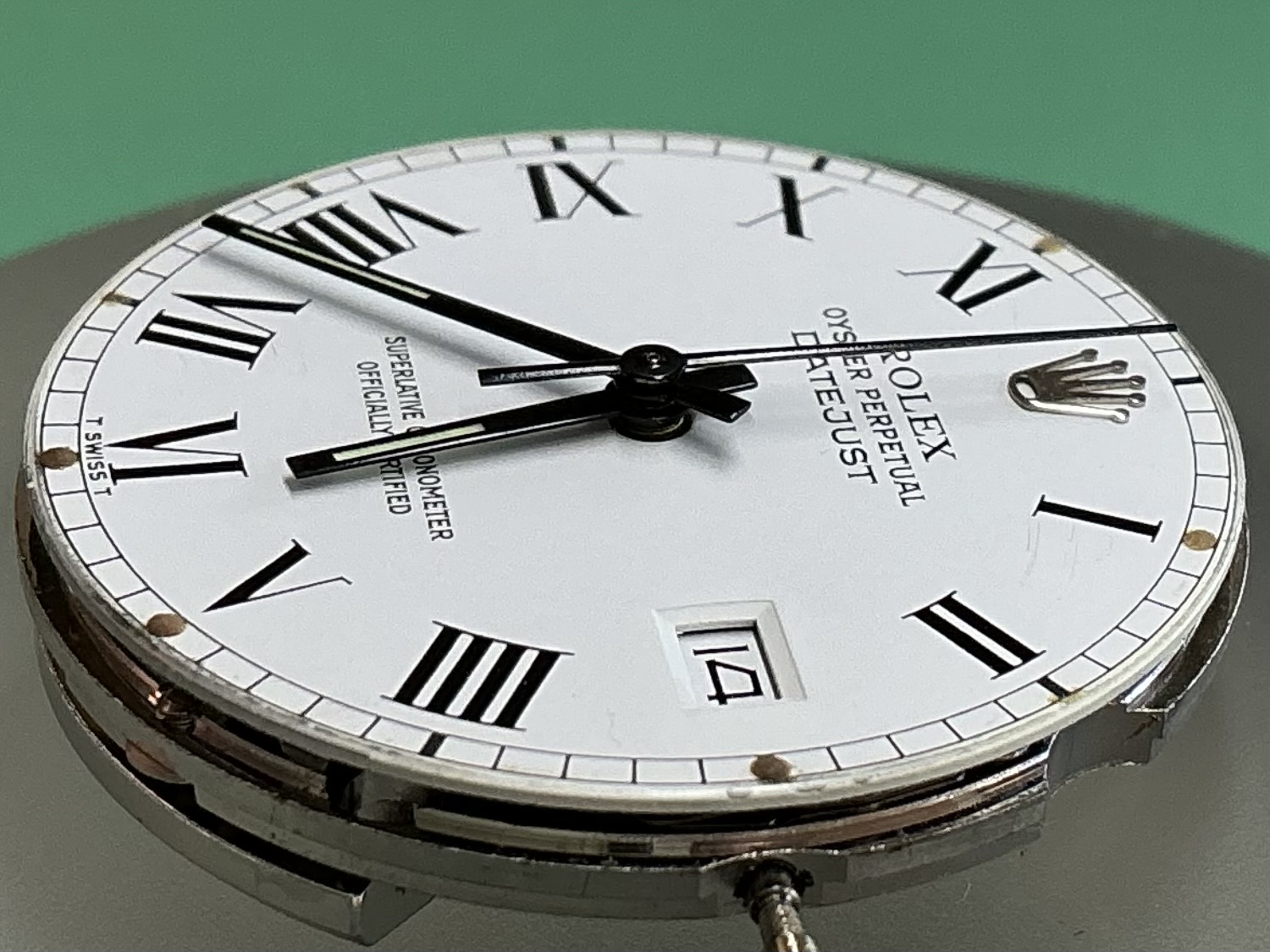
Vintage dials are delicate, and this specific dial showed noticeable fading, cracking, and surface scratching. The hands were in even rougher shape. They were worn, exhibited paint loss, and had visible rust forming. The original luminous paint on the hands and dial was missing, cracked, and actively deteriorating. Stabilizing these components is a critical part of vintage Rolex restoration, as loose paint or rust can easily fall into the movement and cause mechanical failure.
Vintage dials are delicate, and this specific dial showed noticeable fading, cracking, and surface scratching. The hands were in even rougher shape. They were worn, exhibited paint loss, and had visible rust forming. The original luminous paint on the hands and dial was missing, cracked, and actively deteriorating. Stabilizing these components is a critical part of vintage Rolex restoration, as loose paint or rust can easily fall into the movement and cause mechanical failure.
The Movement
Inside the watch, the movement required a full service. The internal lubrication had completely dried out, and the mechanism contained a buildup of dirt and debris. We also noted that the balance staff might require replacement, pending further evaluation during the teardown.
Inside the watch, the movement required a full service. The internal lubrication had completely dried out, and the mechanism contained a buildup of dirt and debris. We also noted that the balance staff might require replacement, pending further evaluation during the teardown.
With the condition report finalized, we moved the watch into our workflow planning stage and ordered the necessary replacement parts.
Phase 1: Disassembly and Cleaning
The physical labor began with uncasing the watch and breaking down the exterior case components. Once the movement was isolated, it underwent a prewash. From there, the movement was placed into our 5-stage ultrasonic cleaning machine to strip away the old oil, dirt, and debris. Following the deep clean, the watchmaker performed a full disassembly of the automatic, dial-side, and movement components to prepare for inspection..
The physical labor began with uncasing the watch and breaking down the exterior case components. Once the movement was isolated, it underwent a prewash. From there, the movement was placed into our 5-stage ultrasonic cleaning machine to strip away the old oil, dirt, and debris. Following the deep clean, the watchmaker performed a full disassembly of the automatic, dial-side, and movement components to prepare for inspection..
Phase 2: Cosmetic Repairs and Refinishing
While the mechanical parts were being prepped, attention turned to the aesthetics. We began the case preparation and refinishing process. This involved carefully removing the accumulated dents and scratches while maintaining the original case geometry, as well as repairing the lugs to safely extract the stuck spring bar. Simultaneously, we addressed the deteriorating dial and hands by expertly reapplying the luminous material, stabilizing the unstable surface components..
While the mechanical parts were being prepped, attention turned to the aesthetics. We began the case preparation and refinishing process. This involved carefully removing the accumulated dents and scratches while maintaining the original case geometry, as well as repairing the lugs to safely extract the stuck spring bar. Simultaneously, we addressed the deteriorating dial and hands by expertly reapplying the luminous material, stabilizing the unstable surface components..
Phase 3: Reassembly and Regulation
With all parts clean and ready, movement assembly began. The internal mechanics were rebuilt and properly lubricated. Once the movement was running properly, the watch underwent final assembly, bringing the newly refinished case, crystal, dial, hands, and serviced movement back together as a single unit.
With all parts clean and ready, movement assembly began. The internal mechanics were rebuilt and properly lubricated. Once the movement was running properly, the watch underwent final assembly, bringing the newly refinished case, crystal, dial, hands, and serviced movement back together as a single unit.
The fully assembled Rolex was then regulated. This ensures the freshly serviced movement meets strict accuracy standards for daily wear.
Phase 4: Quality Control and Completion
Before any restoration is considered complete, it must pass a final evaluation. The Rolex 16000 entered the Quality Control phase to verify that all functional and aesthetic benchmarks were achieved. After passing these checks, the watch was marked ready for shipping, fully prepared for its next chapter of ownership.
Before any restoration is considered complete, it must pass a final evaluation. The Rolex 16000 entered the Quality Control phase to verify that all functional and aesthetic benchmarks were achieved. After passing these checks, the watch was marked ready for shipping, fully prepared for its next chapter of ownership.
At Sutcliffe Hansen, we are incredibly proud to be one of the few shops in the US specializing in vintage and otherwise complicated watch repairs. Whether you have a cherished family heirloom or a recent auction acquisition, our team has the expertise to bring it back to life.
If you have questions about our restoration process or would like to submit your own timepiece for an evaluation, please Click Here To Get Started, or contact us at restoration@sutcliffehansen.com.