
Restoring a Patek Philippe Hunter Pocket Watch
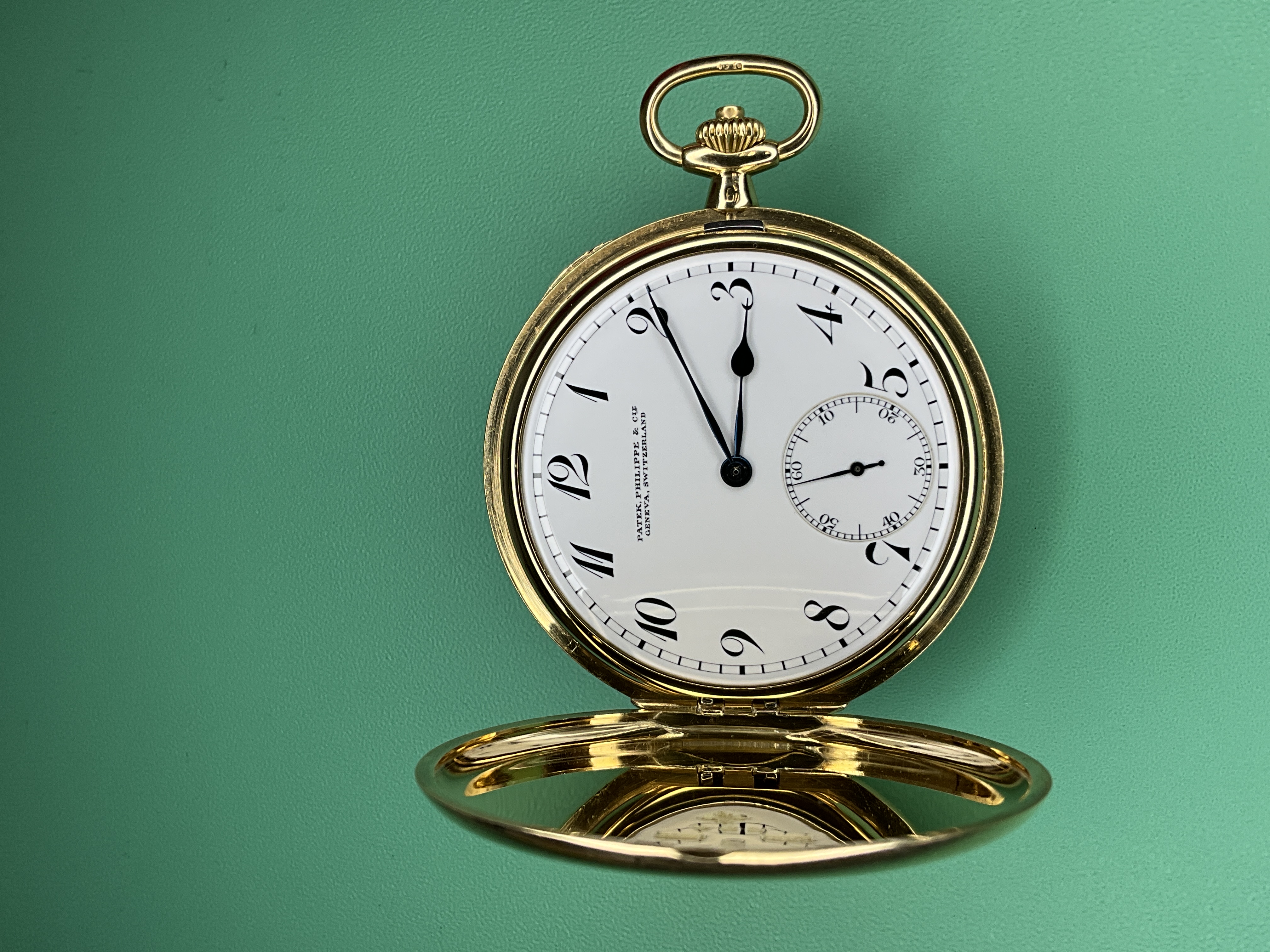
Every so often a watch arrives that asks for more than a service — it asks us to make parts that no longer exist. This was one: a yellow-gold hunter-cased Patek Philippe pocket watch, white enamel dial signed "Patek, Philippe & Cie — Geneva," delivered to our Seattle workshop in its red presentation box. Restoring it meant turning, hardening, and bluing replacement case screws by hand on the lathe.
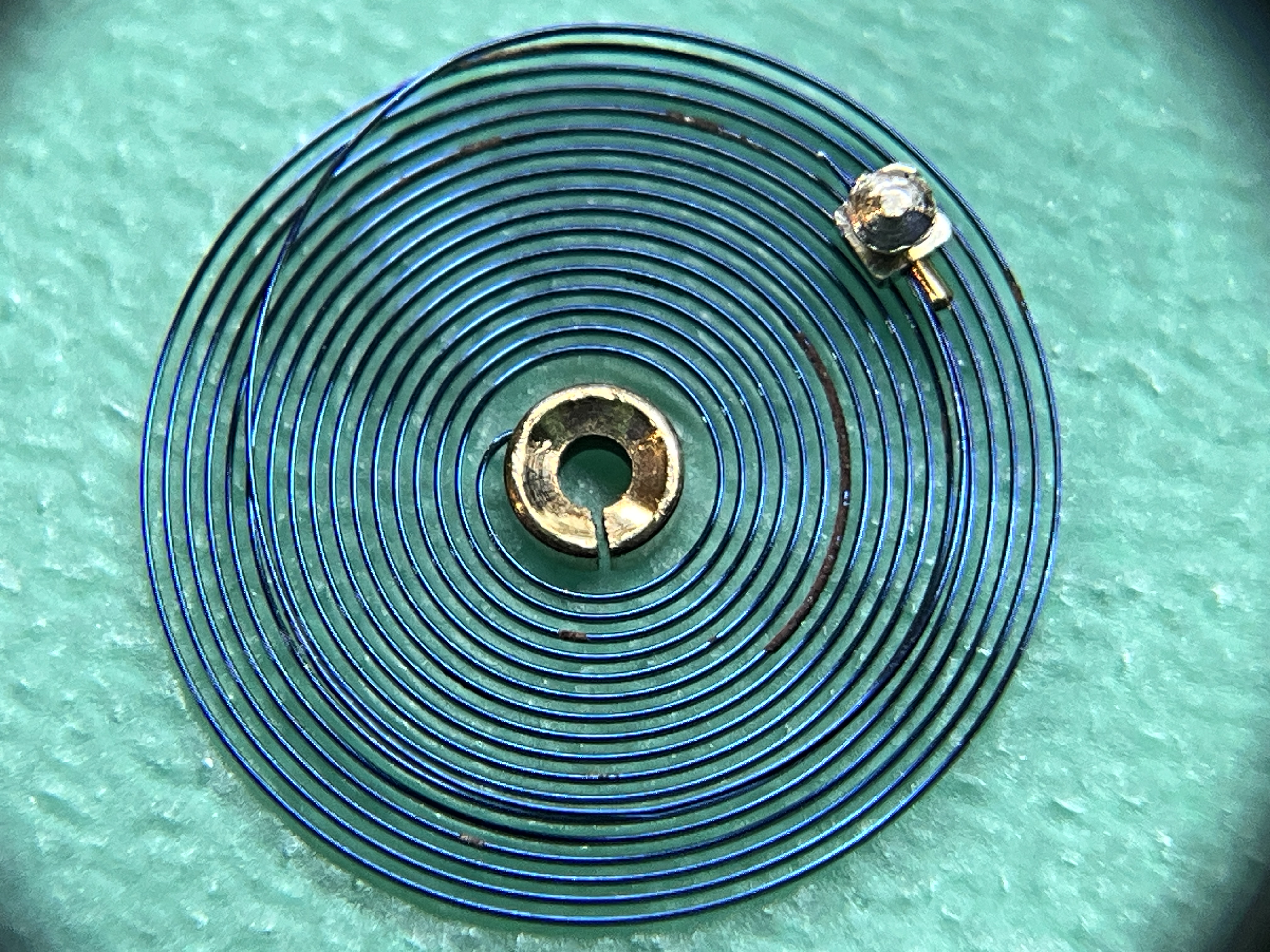
Inside first
The movement was uncased and the case fully broken down for cleaning and repair; the dial was removed and inspected front and back, and every component examined. The hairspring carried surface rust, which we neutralized — removing the excess mechanically before treating the spring chemically to arrest it.
Making the case screws
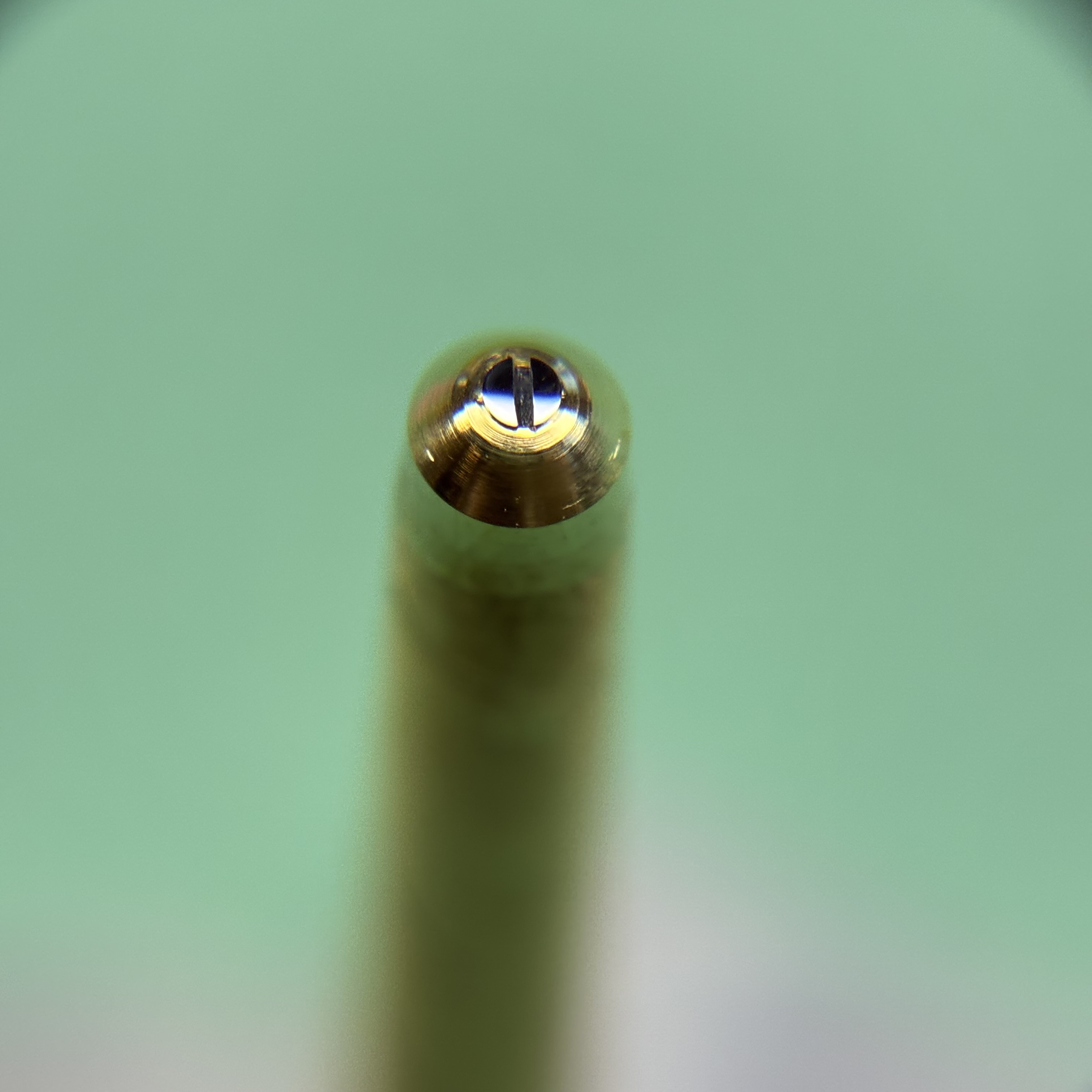
The case was missing correct screws, so we made them. Each original was measured and inspected, then steel blanks were turned and threaded on the lathe and their heads slotted by hand.
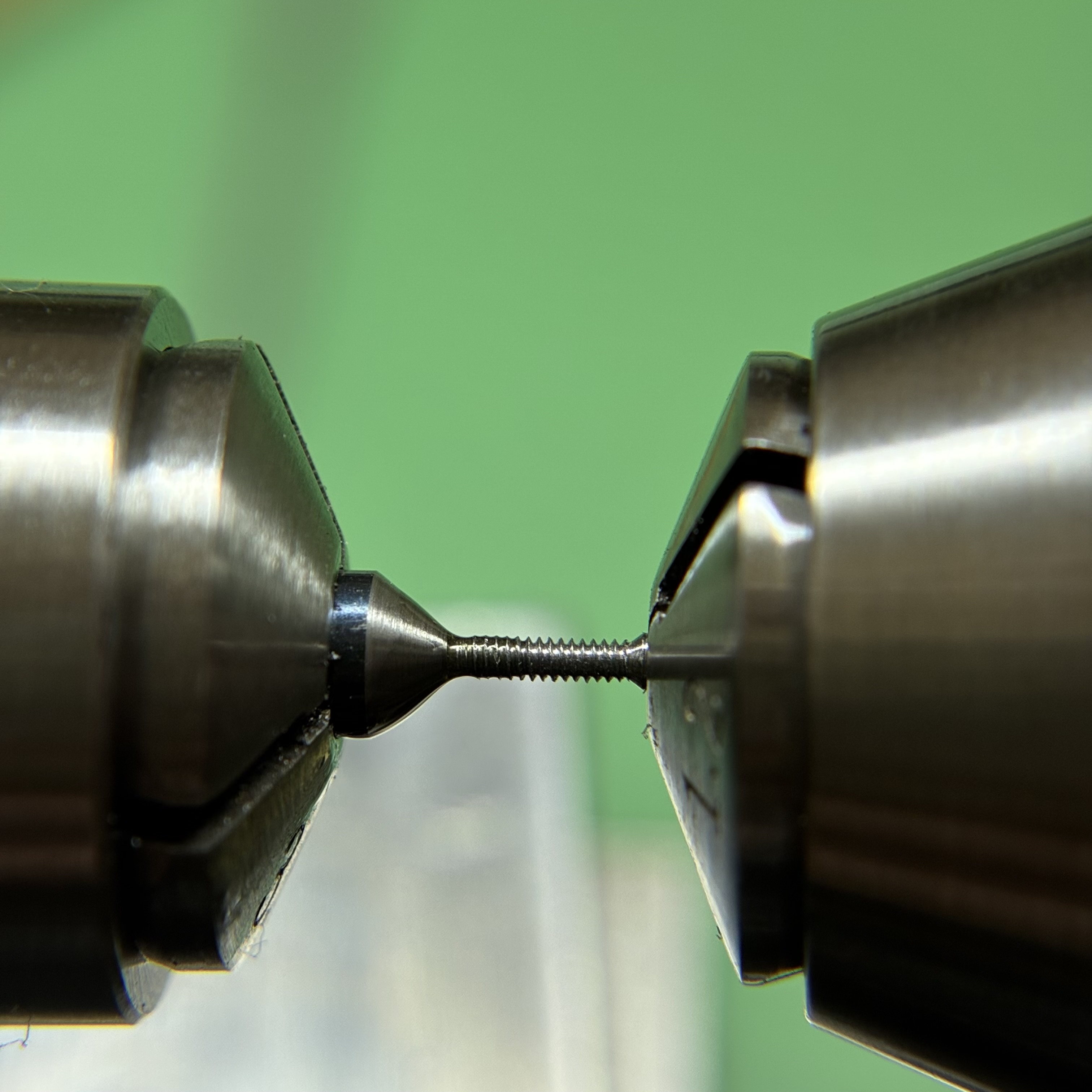
The finished screws were then heat-treated — hardened, then carefully tempered to a deep, even blue. The blue isn't decoration for its own sake; it's the visible signature of correct tempering.
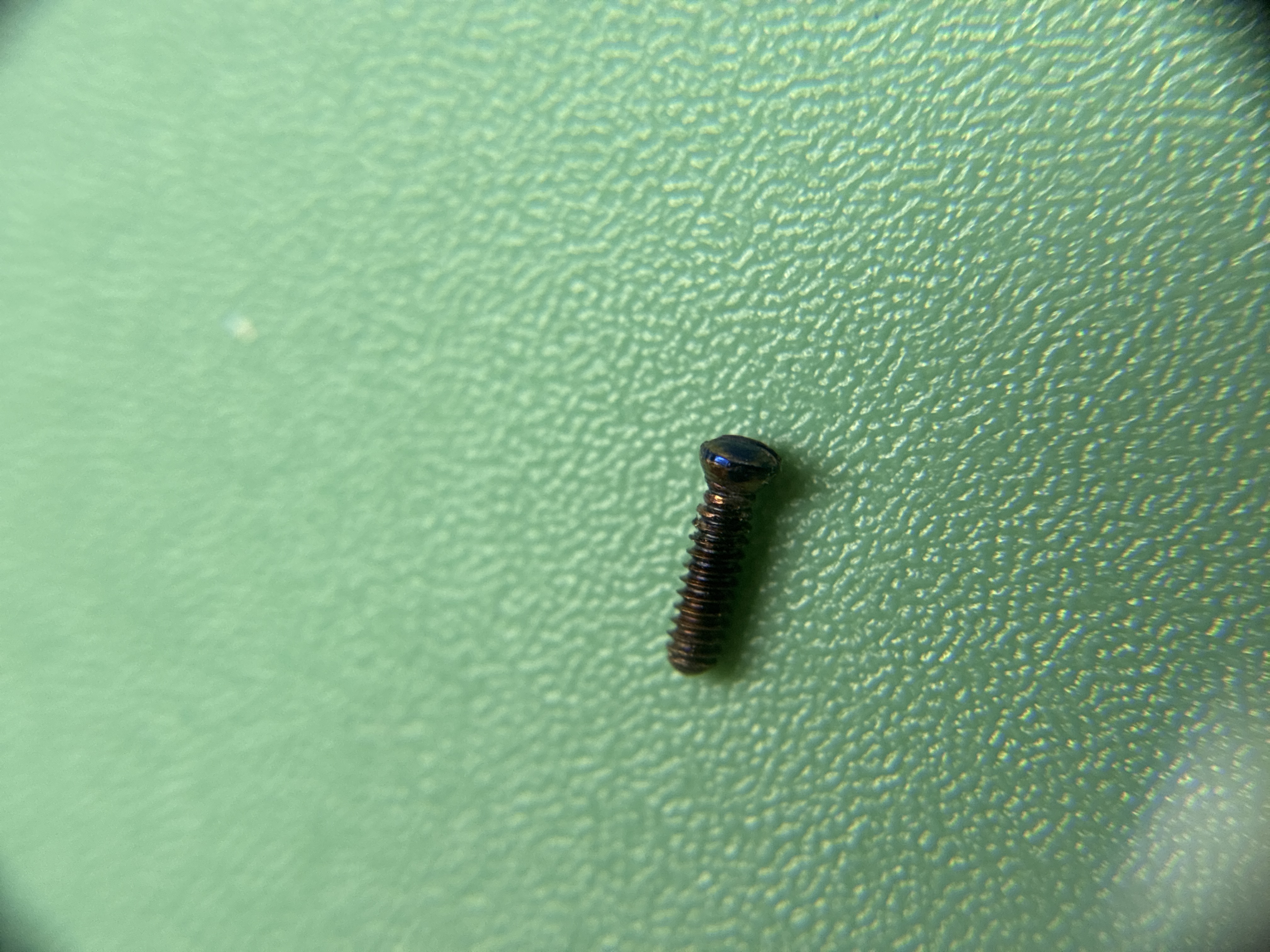
Polishing and threading
Threads were polished the traditional way: each screw was driven into a stick of pegwood charged with polishing paste, worked back and forth until a fine polish developed. The case itself was reamed and tapped to accept the newly made screws.
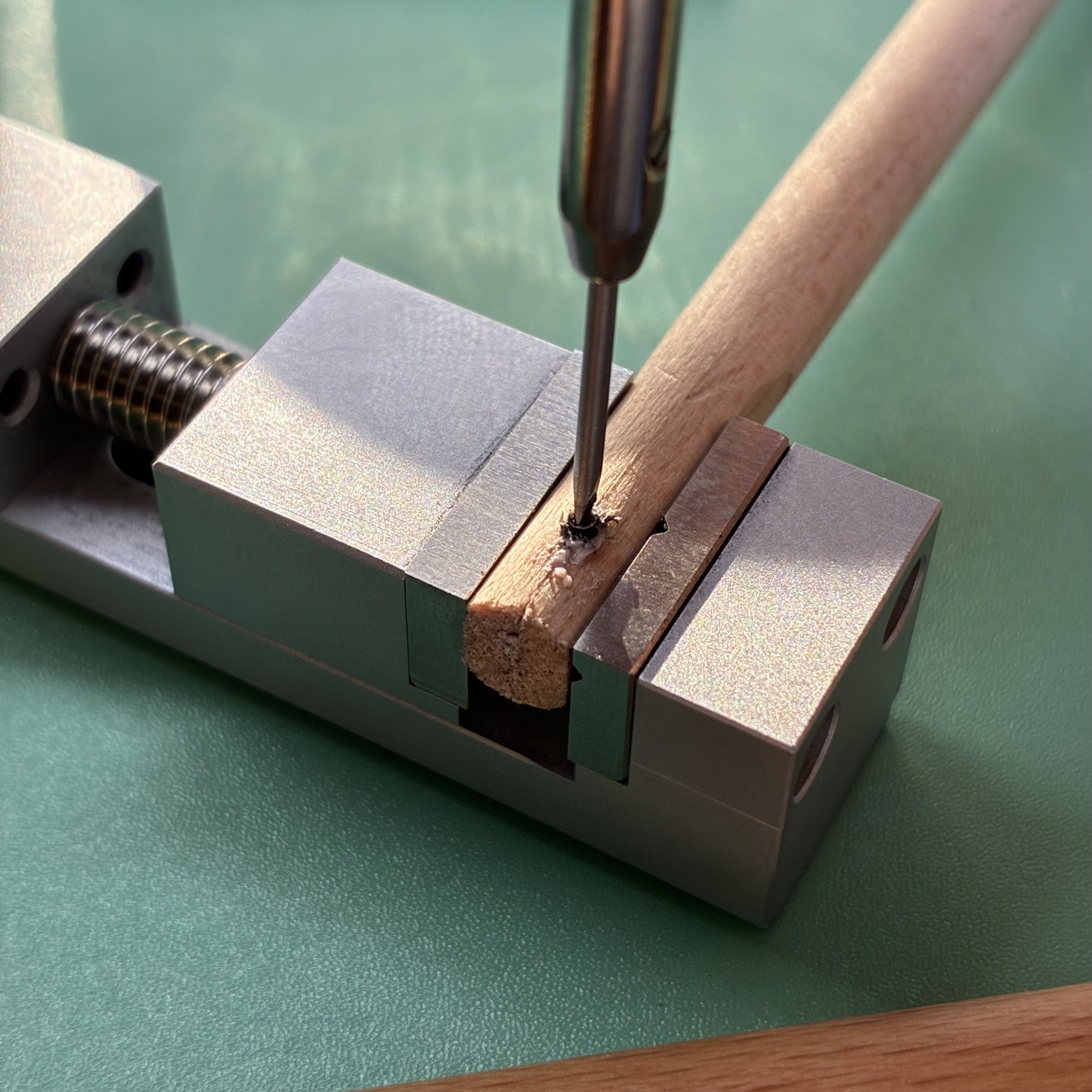
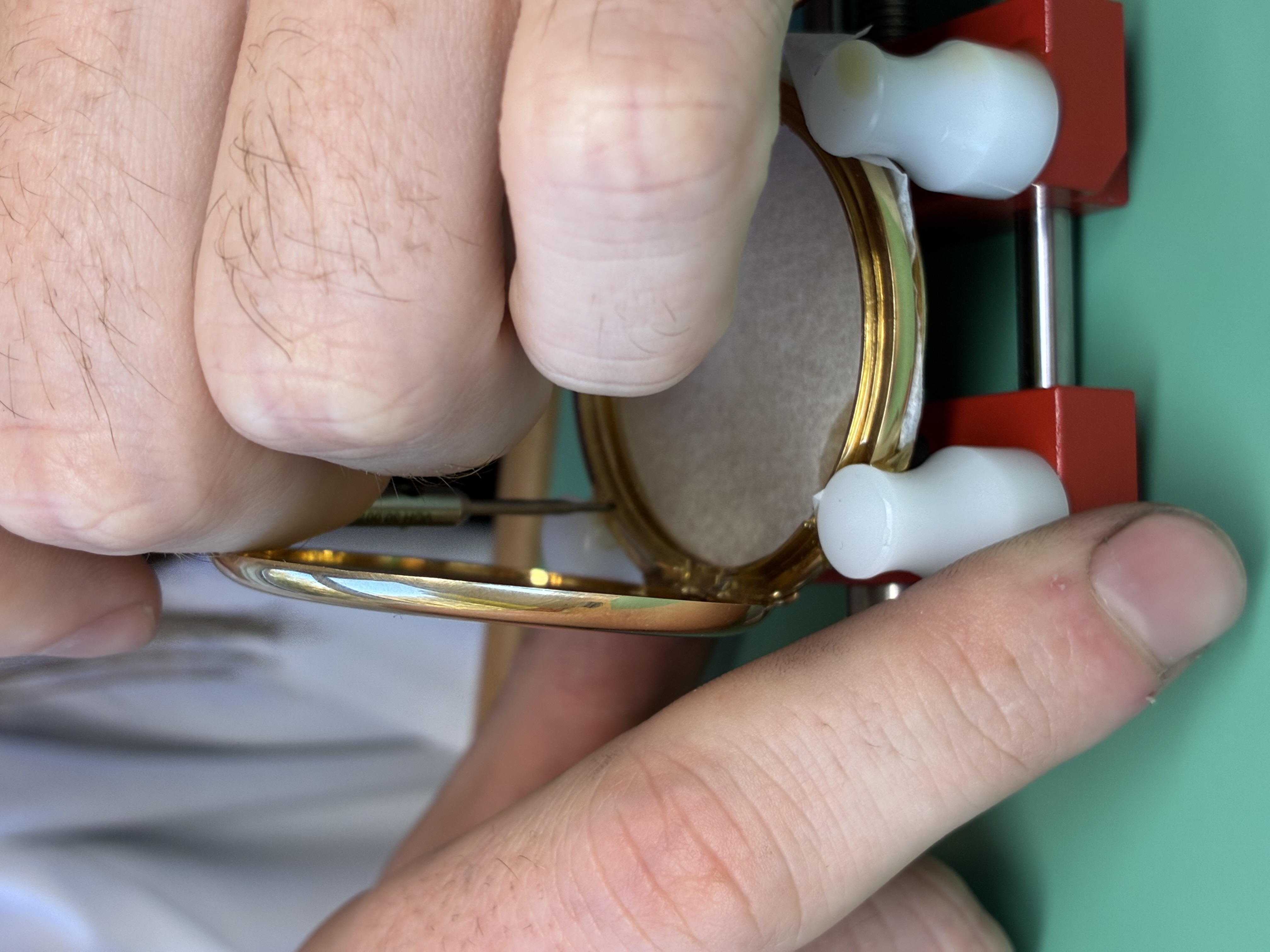
After fitting, the screws were shortened to final length, their heads shaped and adjusted for bezel fit, and every surface hand-polished — down to a final polish on each head.
A non-original hinge spring
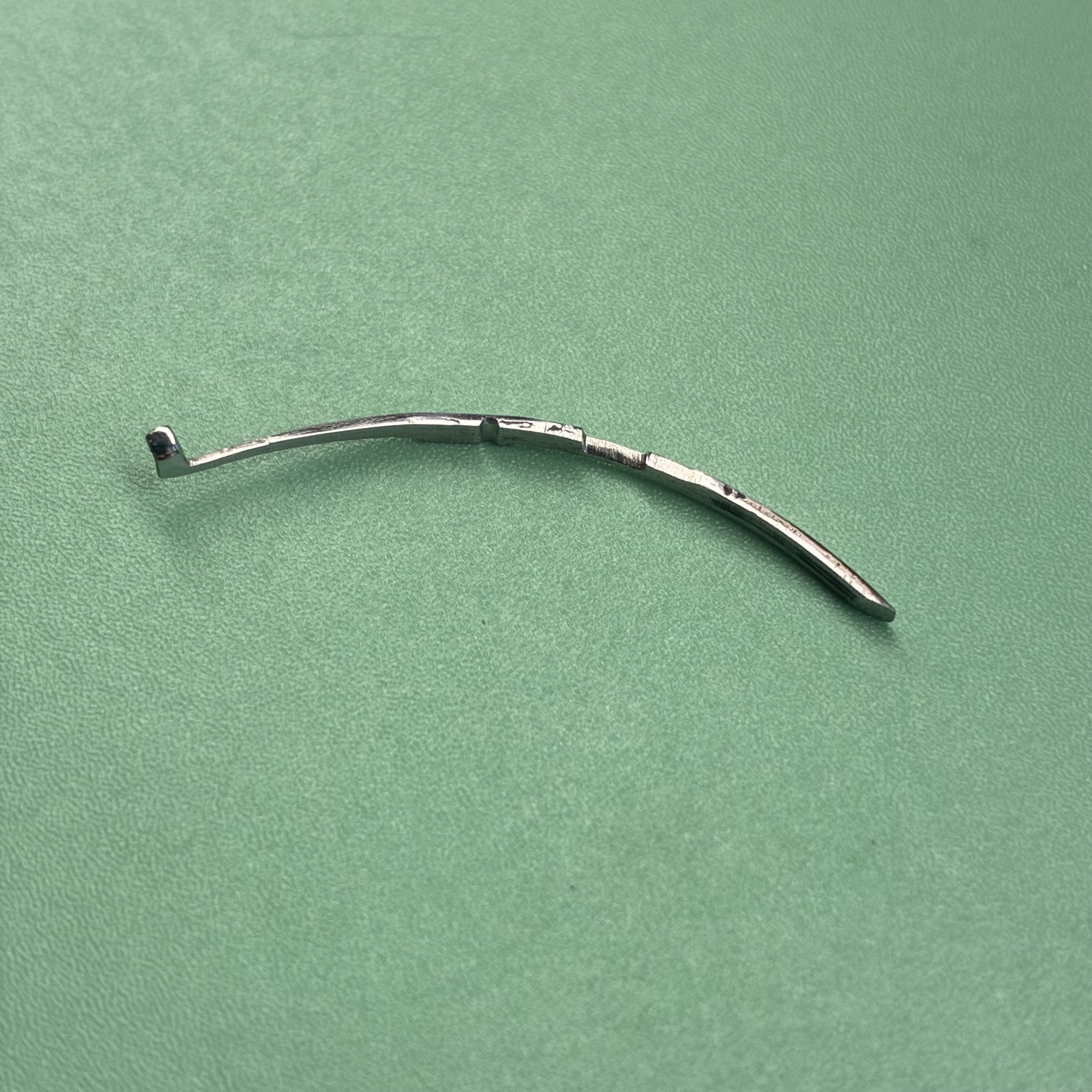
One of the case's hinge springs turned out to be non-original and needed significant hand-work to function fully — improving its surface finish and modifying the accompanying screw until the lid sprang and closed as it should.
Cased, regulated, and tested
With the casing components cleaned, the dial and hands were reinstalled after a final cleaning, and the crystal set into the bezel with a UV-cured adhesive. The watch was then regulated and entered our multi-day quality-control program — testing regulation, performance, and power reserve. It passed timing, power reserve, and QC, and was ready for local pickup here in Seattle.
This is the kind of work we do every day — and sometimes, the kind of work that means fabricating what can't be bought. We offer complete, documented vintage watch restoration on pocketwatches, wristwatches, and stopwatches, mechanical and Accutron. If you have a pocket watch in need of service, start an intake and tell us about it.