
Restoring an Omega Speedmaster (Caliber 861)
The Omega Speedmaster needs little introduction — the chronograph that went to the Moon, powered here by the hand-wound caliber 861. This one arrived at our Seattle workshop tired but honest: a complete service candidate, with a chronograph that no longer moved as crisply as it should and a case showing its years. What follows is the full restoration, start to finish.
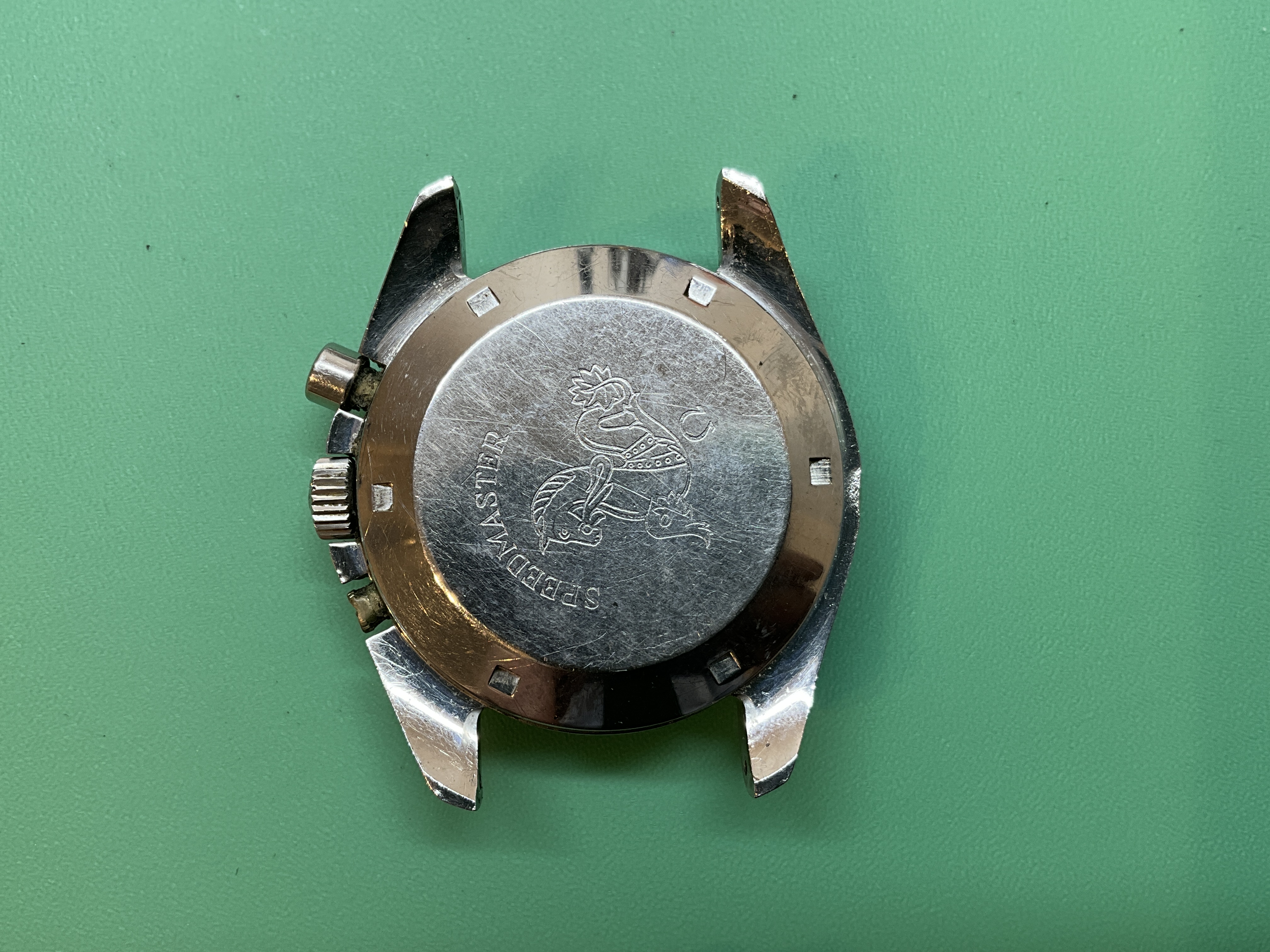
Assessment and teardown
Every restoration begins the same way — a careful assessment, then a complete teardown. As we uncased the movement we noticed one of the two movement-ring screws was missing; a small thing, but the kind of detail that tells you a watch has been opened before. We noted it for replacement and carried on, removing the dial and hands.
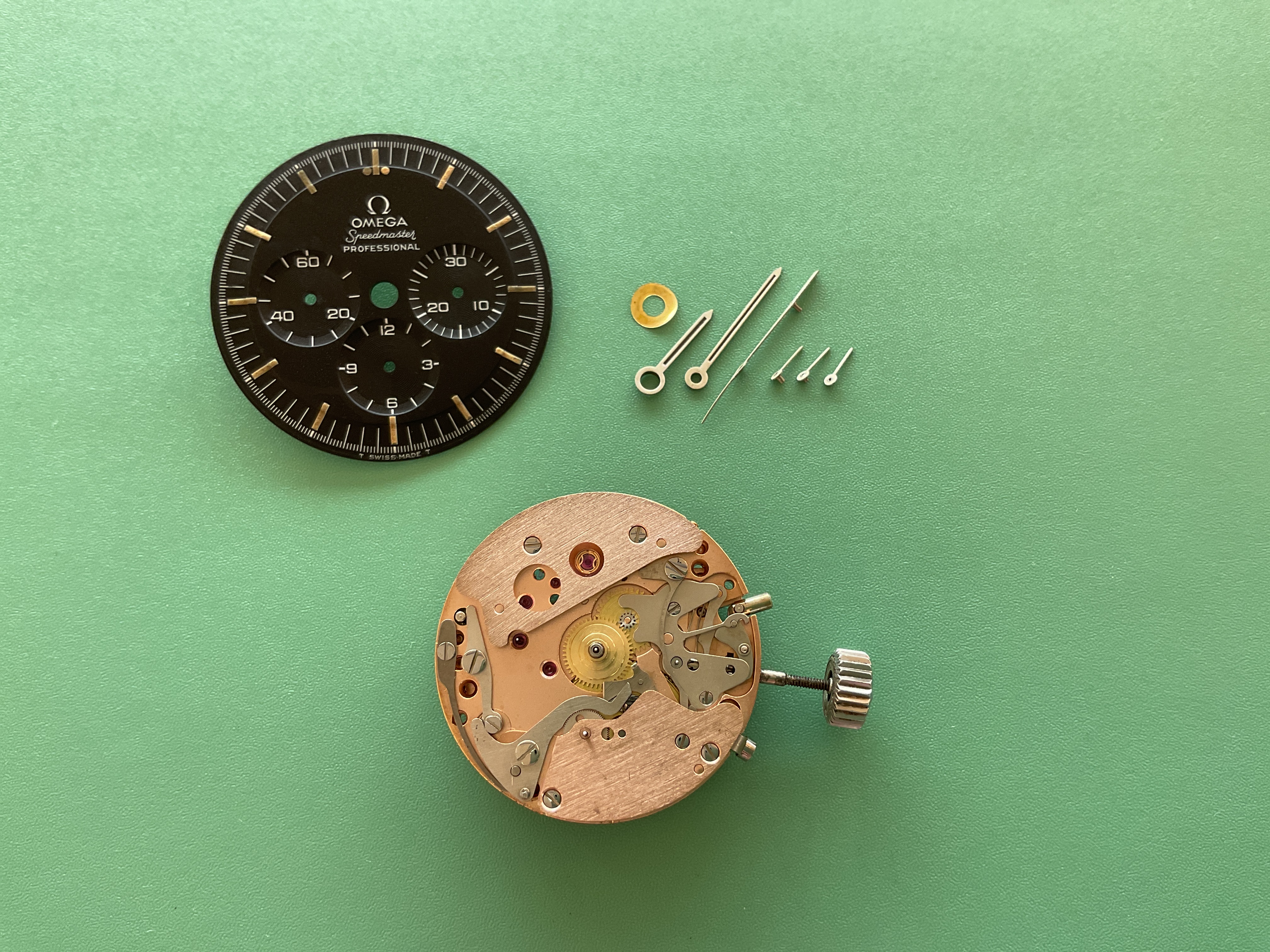
With the movement fully stripped, every component went through ultrasonic cleaning. Only with parts clean and held under magnification can the real condition of a movement be judged — and judged it was, piece by piece, before reassembly began.
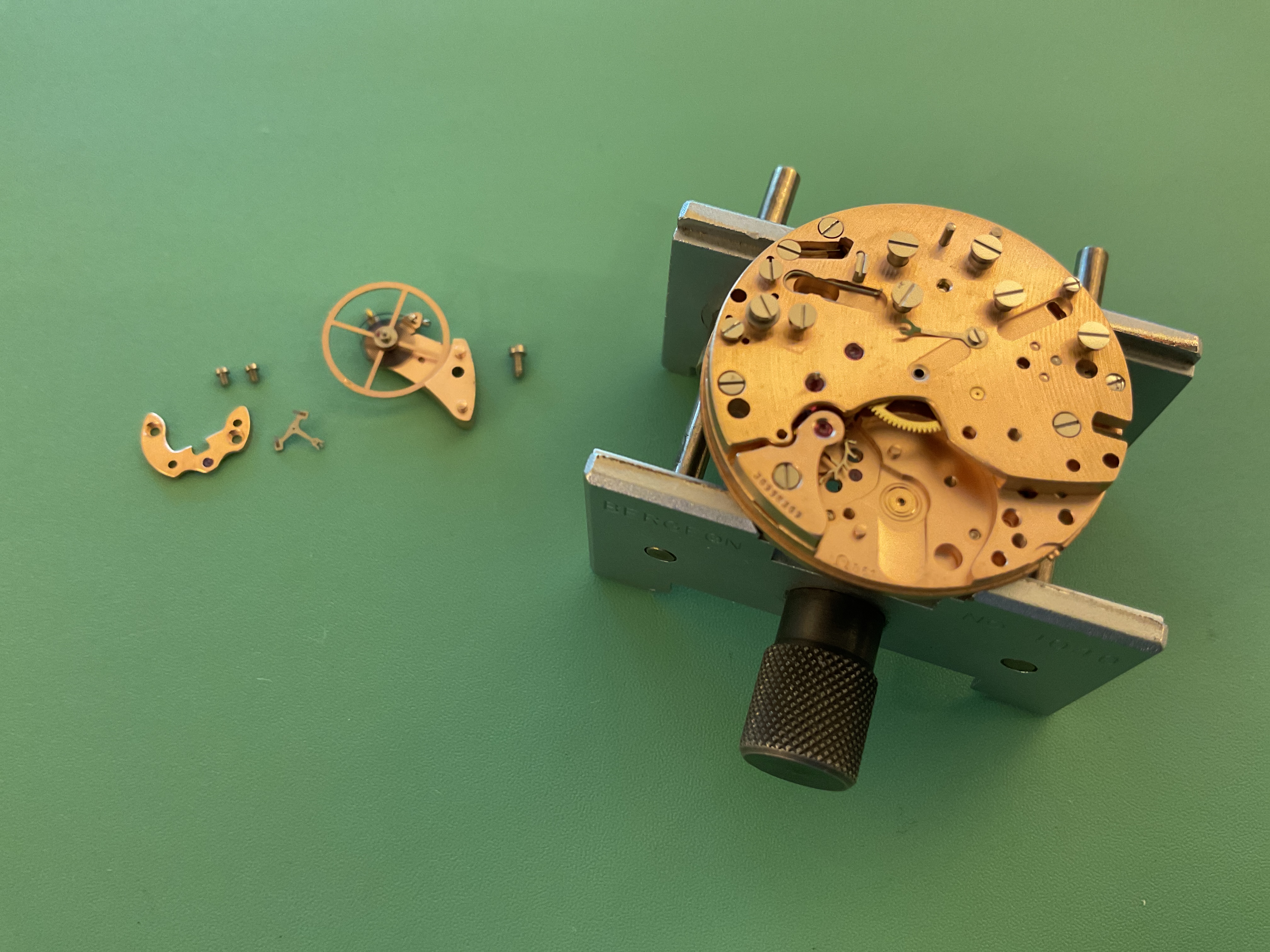
Rebuilding the movement
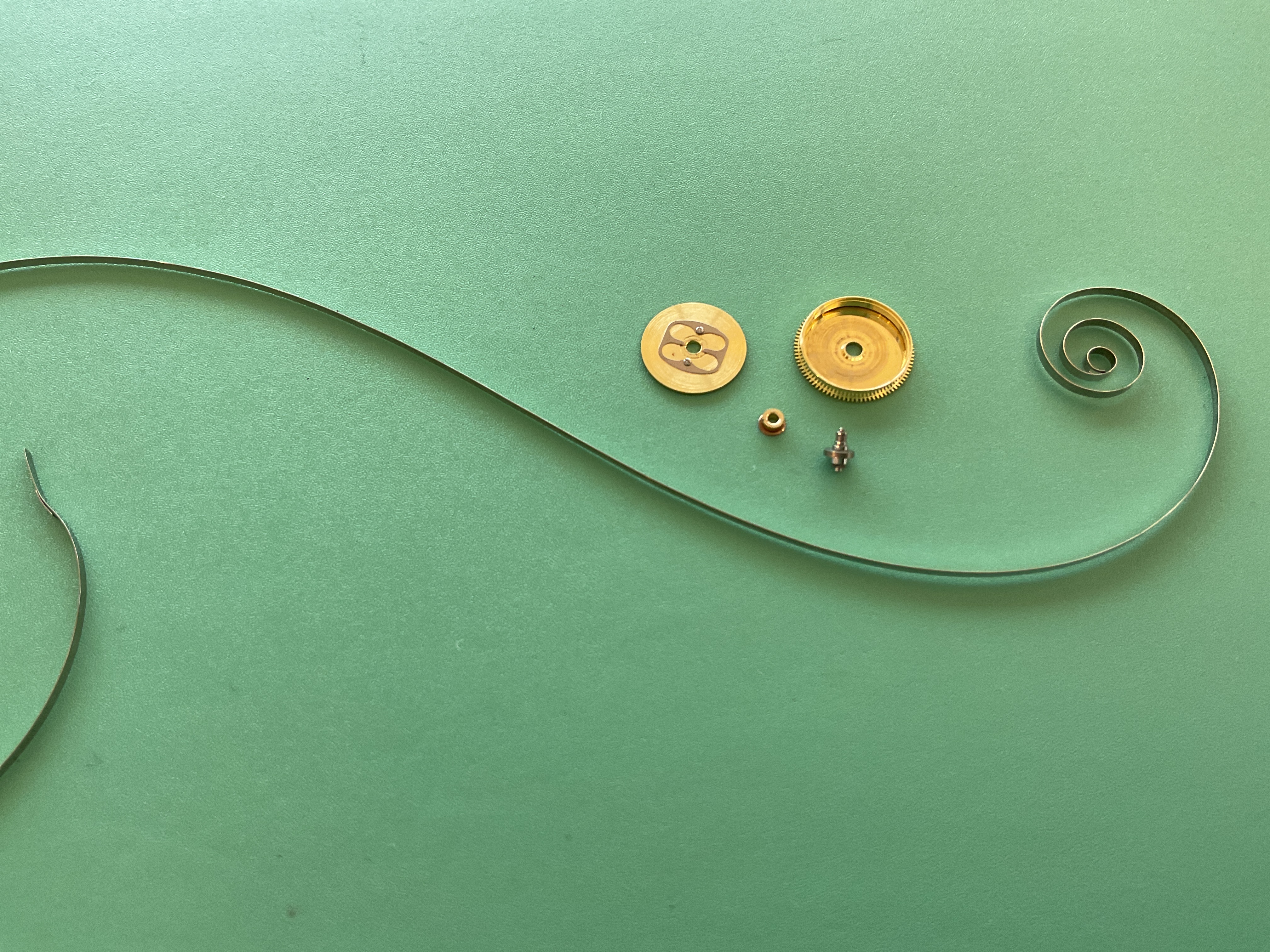
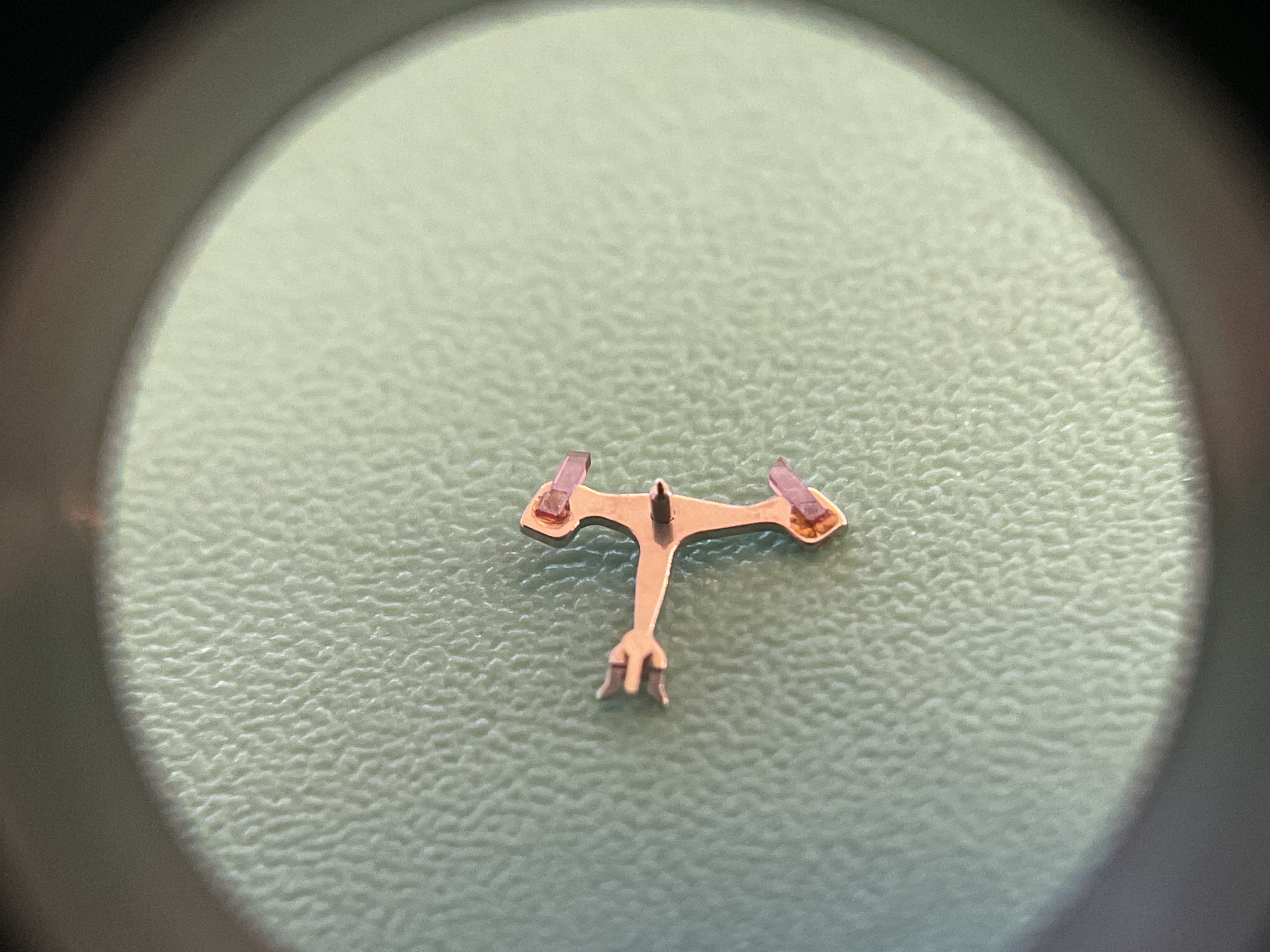
Reassembly is where a restoration is won or lost. We serviced the mainspring barrel, fitted a fresh mainspring, replaced the shellac securing the pallet fork stones, and rebuilt the gear train of the base timekeeping movement. Cap jewels were opened, cleaned, and oiled individually; the keyless works were reassembled and the base movement timed before the chronograph went back on.
A chronograph that didn't quite play along
With the chronograph reassembled, testing revealed the pusher action wasn't moving smoothly. Tracing the drag, we found a part catching against its screw. Rather than force it, we polished the bottom edge of the screw to free the part and protect against future wear — a quiet fix that makes the difference between a chronograph that works and one that works well.
Case, dial, and hands
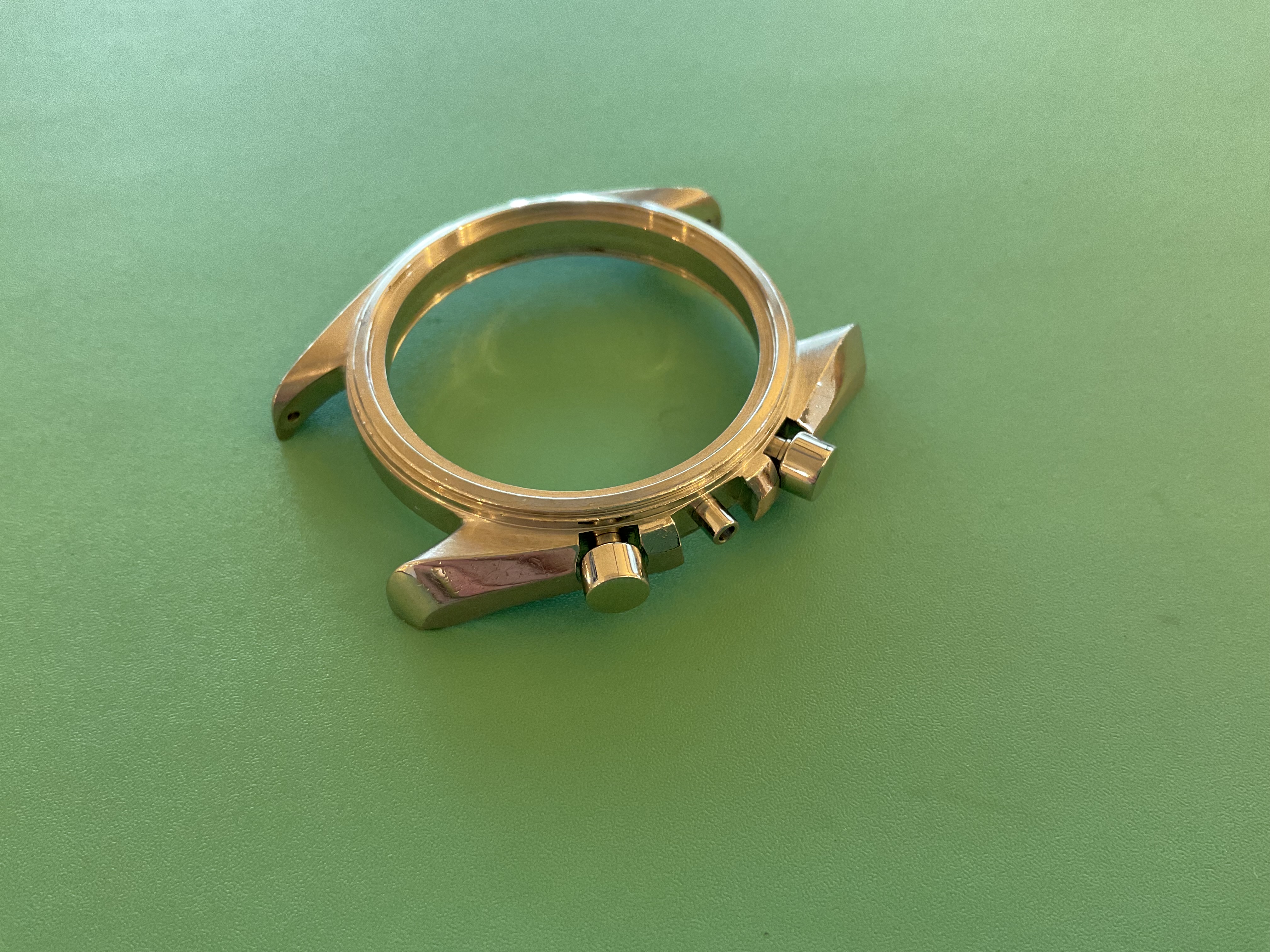
The case was ultrasonically cleaned, refinished, and fitted with new pushers, a new crystal, and a fresh bezel. We replaced the luminous material in the hands so the watch reads clearly in low light, then completed final assembly with the dial, hands, and a new crown.
The value of testing
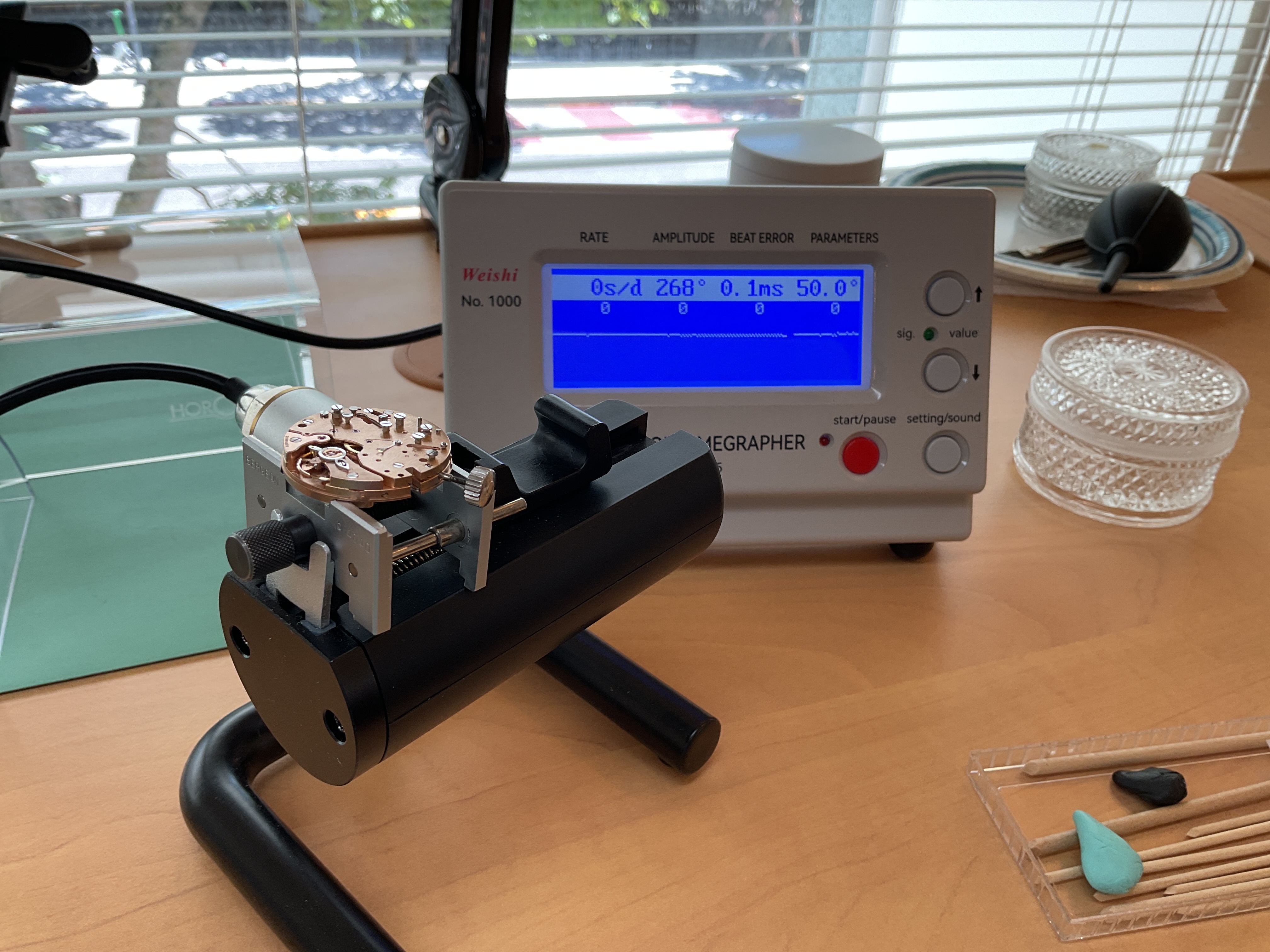
Here is where transparency earns its keep. The watch passed its timing, chronograph-function, and power-reserve tests, and cleared quality-control inspection. But during follow-up power-reserve testing, the mainspring broke — the catch at the end of the spring had come unriveted, letting the mainspring slip inside the barrel.
This is exactly the kind of fault that only surfaces under sustained testing, and exactly why we test the way we do. Reassuringly, this failure mode causes no harm to the rest of the watch; we simply fitted a fresh mainspring and ran the full multi-day test cycle again. The second time, it passed timing, power reserve, and quality control cleanly.
Returned to the wrist
What left our bench was a Speedmaster running to specification — a clean, correctly lubricated caliber 861, a chronograph that fires crisply, a refinished case, and lume that glows again. The same Moonwatch, honestly restored and ready for many more years of wear.
This is the kind of work we do every day: complete, documented vintage watch restoration on mechanical watches and Accutrons of every make. If you have a Speedmaster — or any vintage watch — in need of service, start an intake and tell us about it.